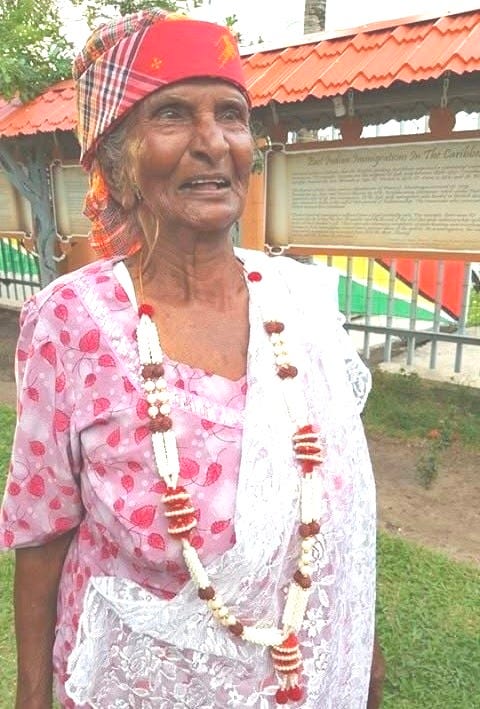
Madrās Kerchief: Indian Indentured Women of the Caribbean and South America with Rūmāl.
From the hands of cotton weavers in South India, the checkered and plaid fabrics of present-day Tamil Naidu came to the West Indies partly through indentureship.

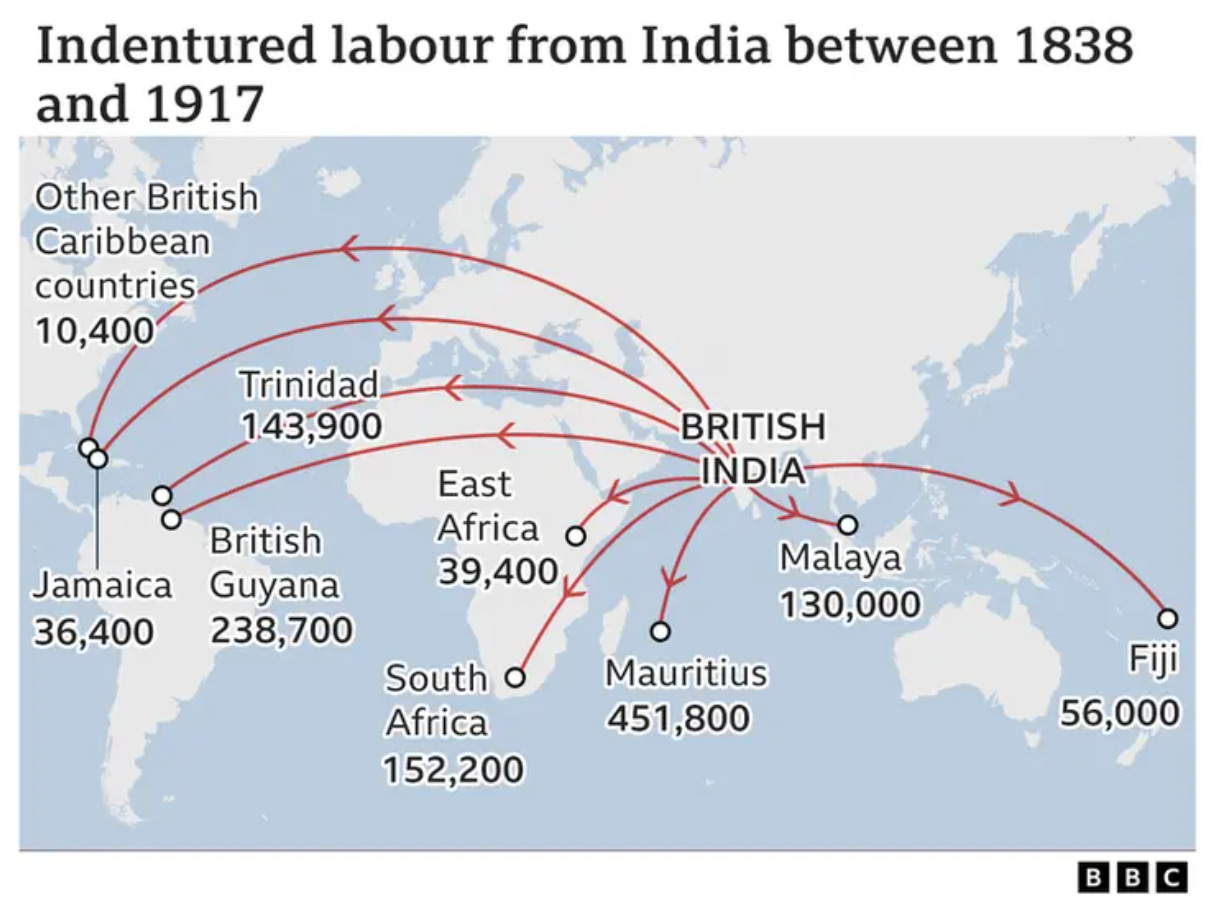
85 percent of Indian indentured labourers sent to the Caribbean came from North India, namely the states of Uttar Pradesh and Bihar, while 15 percent hailed from South India, predominantly Tamil Naidu. The former departed from Calcutta Port while the later boarded ships at the Madras Port. Both were major commercial centers on the South Asian coasts but business skyrocketed due to the presence of European trade companies followed by British, French, Dutch, and Portuguese colonisation in the region. An estimated 1.6 million East Indians were collectively ripped from their homelands and exploited under this labour scheme, shipped to various outposts across the kālā pānī (black waters). Roughly half a million found themselves scattered around the Caribbean, the vast majority of whom landed in Guyana (formerly British Guiana, not to be confused with the modern-day country of French Guiana), Trinidad and Tobago, Suriname (Dutch Guiana), and Jamaica.
Despite the Caribbean being a small geographic area with a relatively niche community of Indian people, there are interesting particularities that have developed in each former colony now country. One fascinating parallel between Guyana and Jamaica is the prevalence of the rūmāl wrapped around the heads of female indentured labourers and their descendants. Originating with the hands of coastal weavers in Madras, present-day Tamil Naidu, these multi-coloured checkered or flannel pieces of cloth are made from cotton and vegetable dyes. They were massively popular in the fishing village, now port city, of Chennai where men wore the long reams of fabric around their waists as lūngī (sarong). European merchants first encountered the material in this context and seeing that they were both lightweight and breathable, introduced them to the international market. With documented origins going as far back as the 1500s, the rūmāl had been transported to North American, Europe, and West Africa by the 1900s; the West Indies being another hub amongst them.
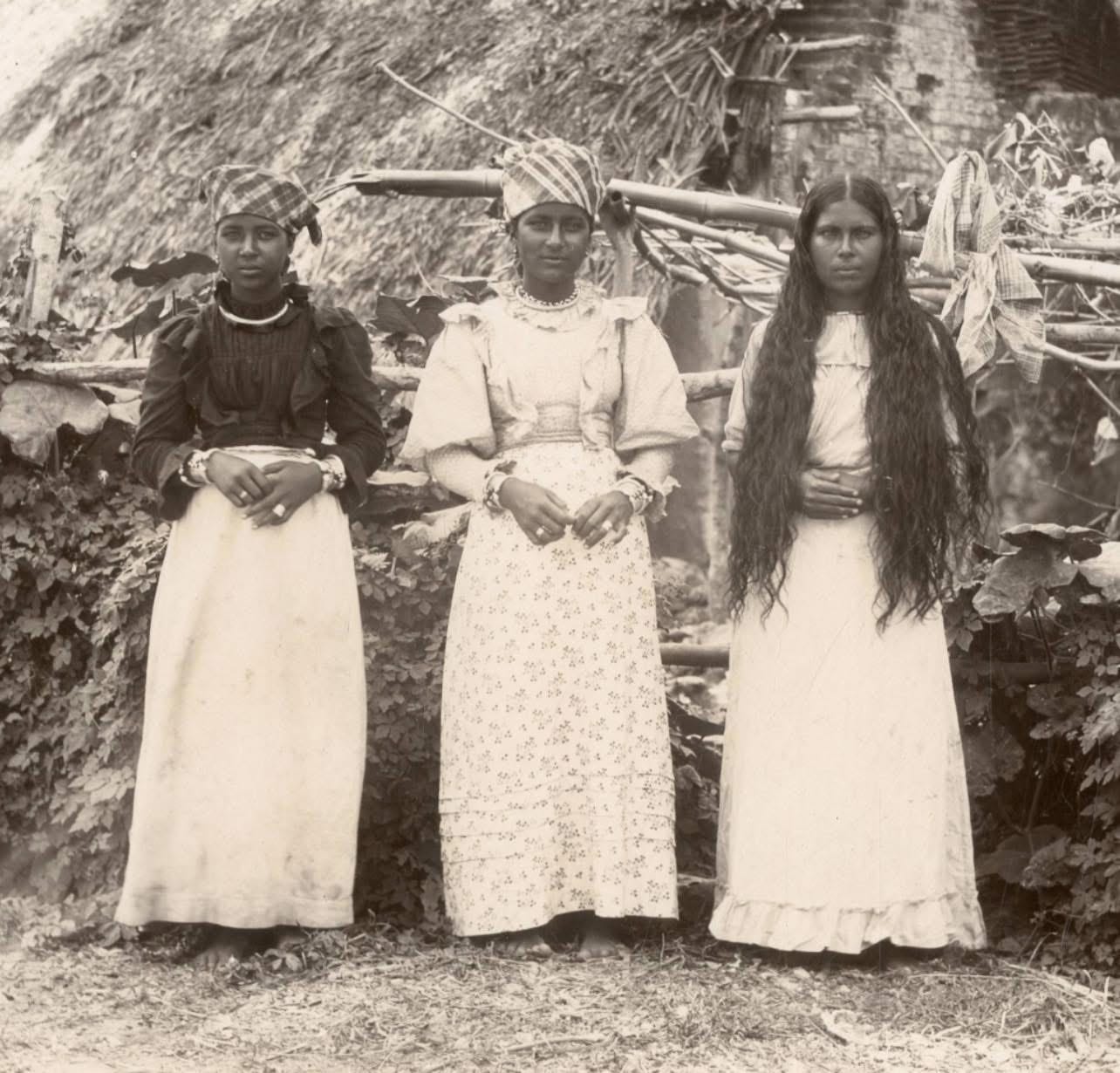
While some of the ladies in Trinidad and Suriname wore rūmāl, it was nowhere near as common in those two countries in comparison to Guyana and Jamaica. What are potential explanations for this phenomenon? While Madrāssīs constituted a significant minority of the overall indentured population (~15%), there was a larger share of them proportionally in Guyana. On the other end, most of the ships that landed in Jamaica had departed from Calcutta Port. But Indo-Jamaicans lived in closer proximity to the more populous Afro-Jamaicans who already adopted the Madrās kerchief due to their global popularity. With both Guyana and Jamaica under British colonial rule, they had access to European products pedaled along the Caribbean Sea. Even though the rūmāl was sold to the ancestors in yards of fabric, British merchants rebranded them as the Madrās handkerchief or kerchief, reflecting their intention for the cloth to be cut into pocket squares for men’s formal attire.
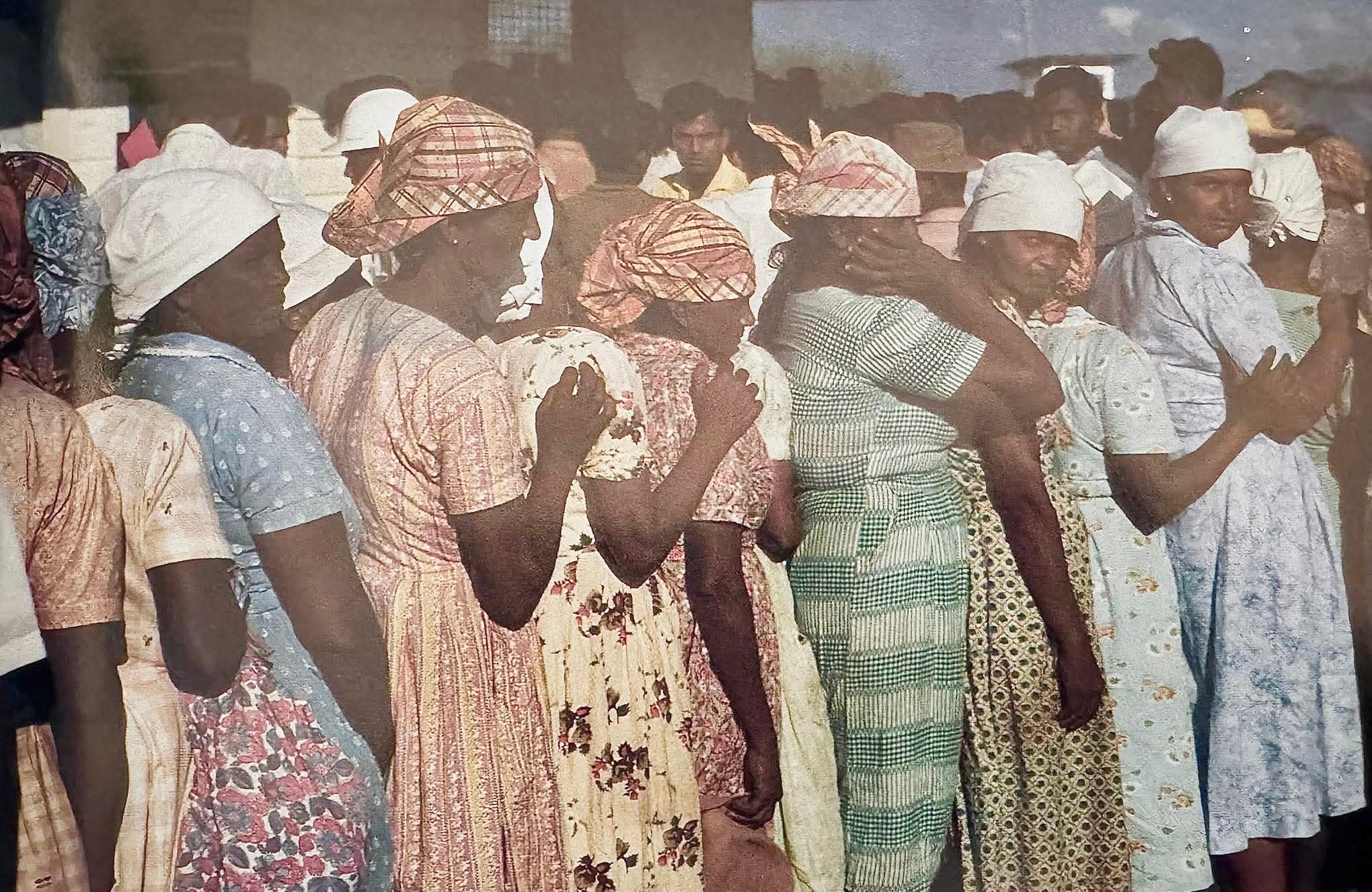
The thin and airy nature of the cotton made rūmāl perfect for manual agricultural labour under the blazing heat of the Caribbean sun. It was a common visual in the rural areas where women were more often engaged with that line of work. Eventually it became a part of everyday dress to the point that Indo-Guyanese and Indo-Jamaican women banded their hair in the kerchief for weddings and pūjā or Hindu ceremonies. Meanwhile, the white orhanī or veil draped on the head and across the torso made with lace, voile, or chiffon fabric was standard for the vast majority of Indo-Trinidadian and Indo-Surinamese ladies. It has been relayed anecdotally from older heads that North Indian descended women in Guyana wore plain white rūmāl while their counterparts with South Indian roots donned the colourful patterned ones. There is a common notion that an authentic rūmāl is dyed multiple times on both sides so this is a curious observation. Others noted their Nānī (maternal grandmother), Ājī (paternal grandmother), and/or Amma (Tamil kinship term for one’s mother) would store paisā (money) in the flap of the kerchief. They were a point of pride for these ladies who starched and pressed their handkerchief prior to wearing them, keeping them in special storage.
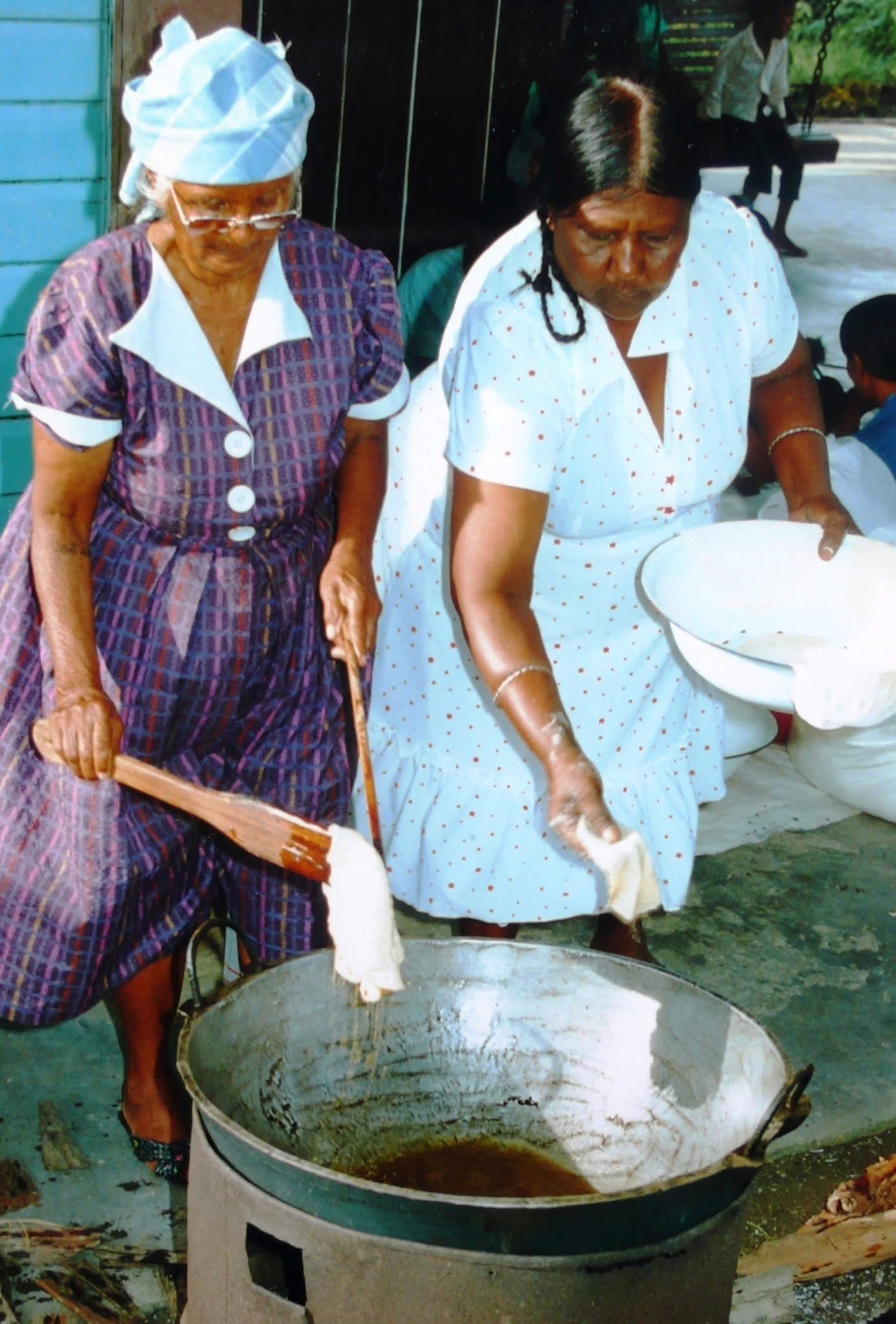
While the rūmāl has declined tremendously in prominence in Guyana today, and the last few Indian women who wear them on a daily basis are expected to have passed away entirely in the next decade, it is still maintained by some shāktā devotees who preserve Madrāssī religious practices. Such rituals like Karagam Pūjā and the worship of Mūrūgan Baba, Mariamman Mā, and Kālī Mā at local kovils, the Tamil word for mandir or temple; are attended by Hindu women donning the rūmāl. They may or may not have Tamilian backgrounds themselves. Also some young men and women playing the thāppū, South Indian style frame drums, wrap the kerchief around their waists. Due to the increased interconnectedness of the Indo-Caribbean community, Trinidadian Hindus who uphold Kālī Pūjā according to the Madrās tradition have adopted these dressing styles as well. Similar to the orhanī, the handkerchief is largely relegated to ‘special occasions’. It has completely died out in Jamaica where most Indo-Jamaicans were converted to Christianity and only a minority identify as Hindus and Muslims. Those who are Hindu are part of the Sanātanist sect which derives from North India.
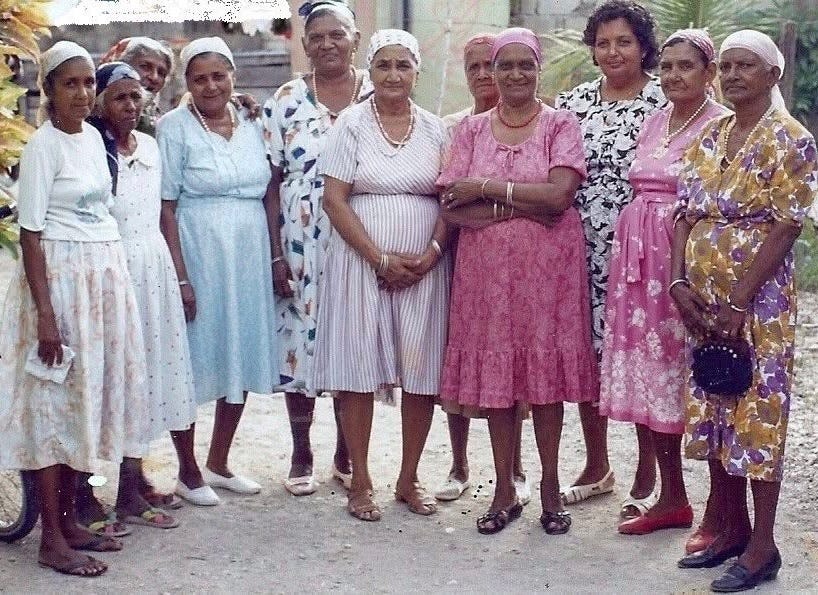
There was an ensemble of Indo-Jamaican women known as the ‘Golden Girls’. They were daughters and granddaughters of labourers who came directly from India. The Golden Girls were a fixture at cultural celebrations, pūjā, births, weddings, and funerals. Entirely from memory, without the need for song books, they sang numerous folk compositions in the Hindustani language. Some of them played instruments such as the dholak or hand drum. They proudly wore their rūmāl at each event. These ladies have all since passed away, taking the music, language, and handkerchief with them. Today the Madrās fabric is widely referred to as a ‘bandana,’ adorning the hair and dresses of Afro-Jamaican women for national holidays like Emancipation Day on August 1st. It is ironic that most Jamaicans do not associate the cloth with its South Asian origins nor Indian indentured labourers. How rūmāl was adopted by African-descended people in the West Indies is a complex story but that will be explored in-depth in another post. Please subscribe to keep up to date when that article is live!